Conditions That Look Similar
How Spinal Stenosis Differs from a Herniated Disc
What Is a Herniated Disc?
A herniated disc occurs when the soft center of a disc (the nucleus pulposus) pushes out and presses on a nerve.
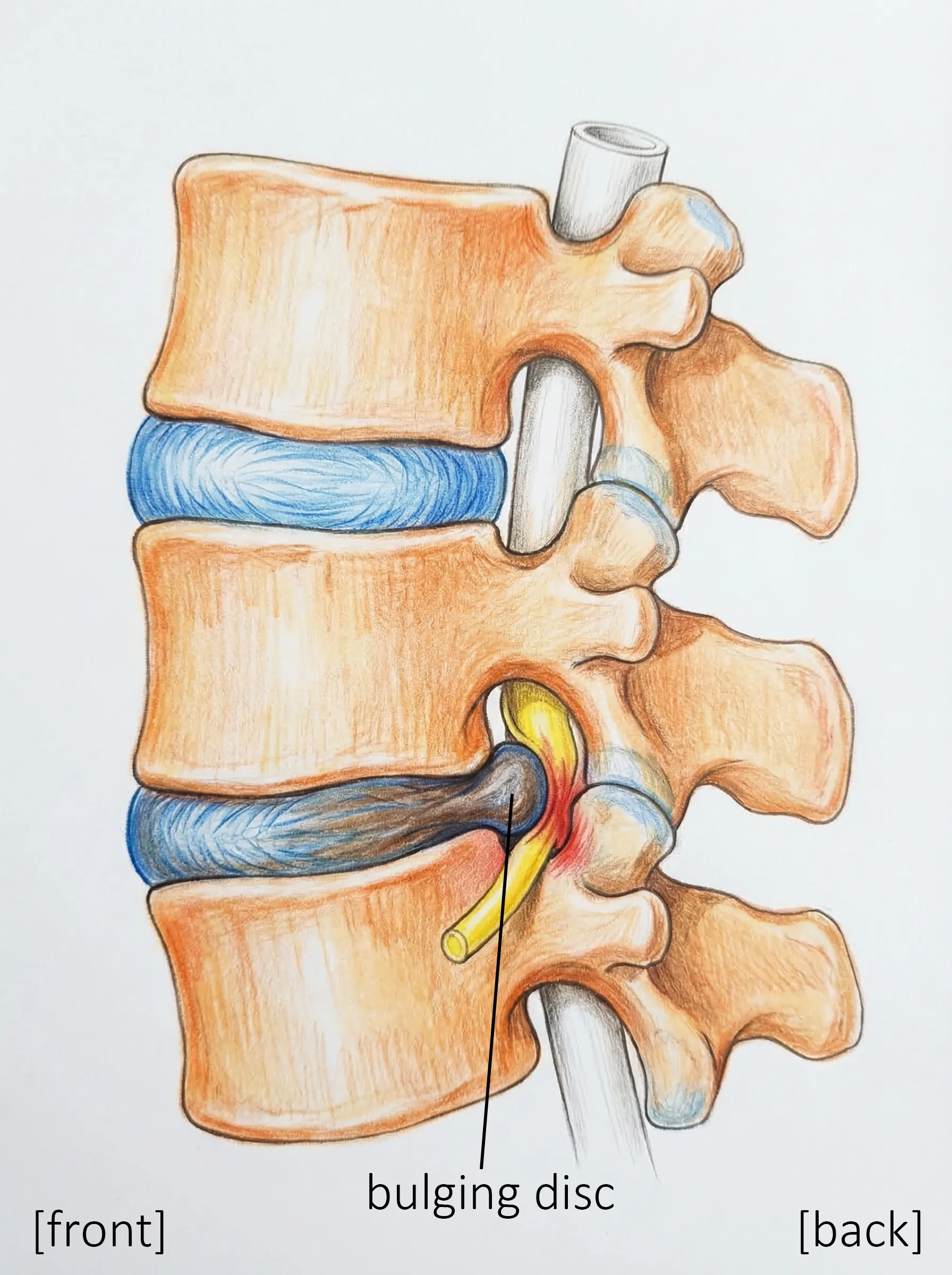
Key Differences from Spinal Stenosis
| Feature | Herniated Disc | Lumbar Spinal Stenosis |
|---|---|---|
| Typical age | More common in your 20s-50s | More common after age 50 |
| How it starts | Often sudden onset | Symptoms develop gradually |
| Main cause | The disc pushes outward | The entire spinal canal narrows |
| Painful posture | Worse when bending forward | Worse when leaning back; better when bending forward |
| Intermittent claudication | Uncommon | A hallmark symptom |
| Natural course | Often improves on its own | Tends to progress over time |
A Simple Way to Tell Them Apart
Bending forward brings relief -> More likely spinal stenosis Bending forward makes it worse -> More likely a herniated disc
However, both conditions can exist at the same time.
In older adults especially, a disc herniation from earlier years may be present alongside age-related stenosis. In such cases, doctors typically use the broader diagnosis of lumbar spinal stenosis and describe the disc as "bulging" rather than calling it a separate herniation.