Exercise Therapy
Recommended Exercise Menu
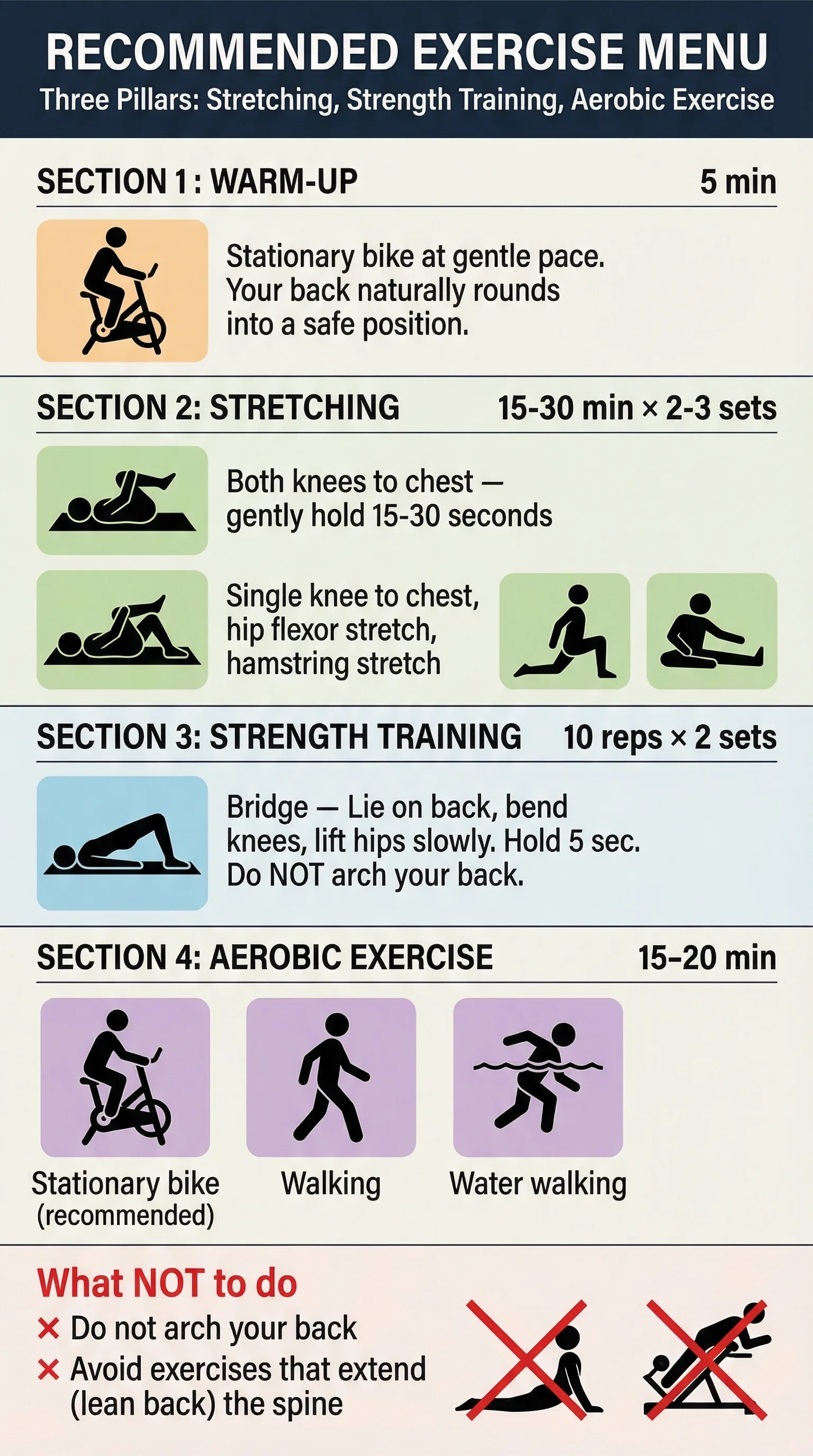
The following exercises are based on those shown to be effective in multiple clinical trials, adapted so you can do them safely at home.
Important:
Always check with your doctor before starting an exercise program. Some exercises may not be appropriate depending on your symptoms.
Warm-Up (5 Minutes)
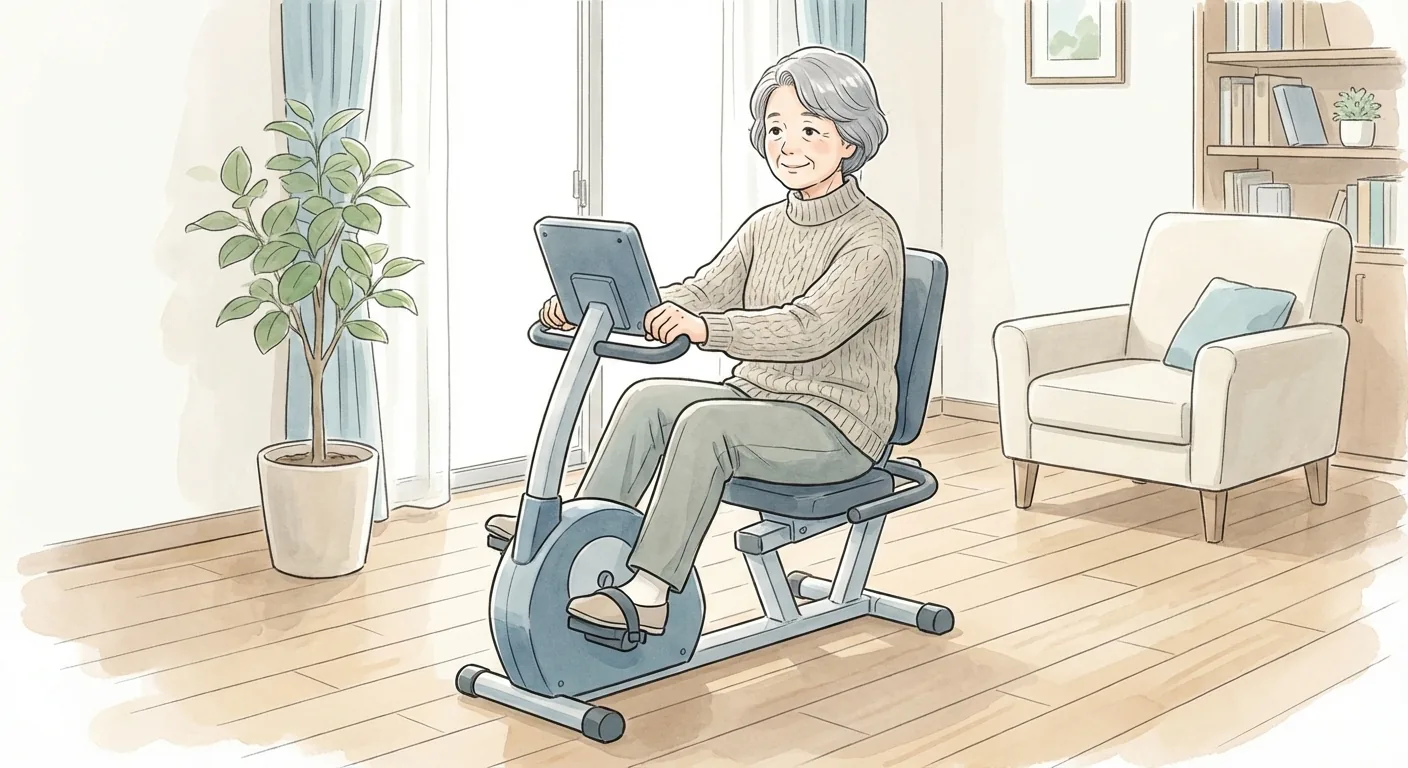
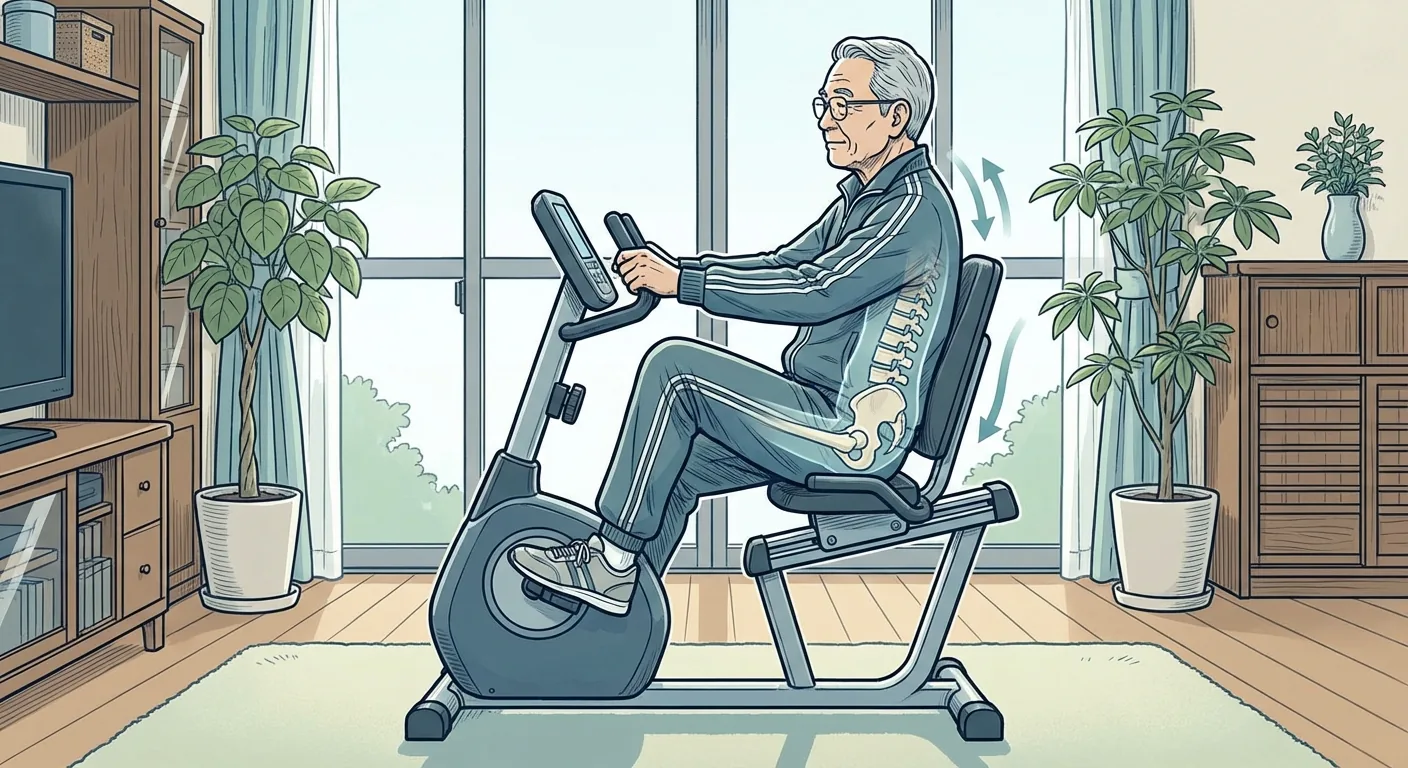
Slow pedaling on a stationary bike is the best way to warm up.
The natural forward-leaning posture keeps your spine safe while warming up your body. If you don't have a stationary bike, marching in place while seated in a chair works too.
Stretching (Hold Each for 15-30 Seconds, Repeat 2-3 Times)
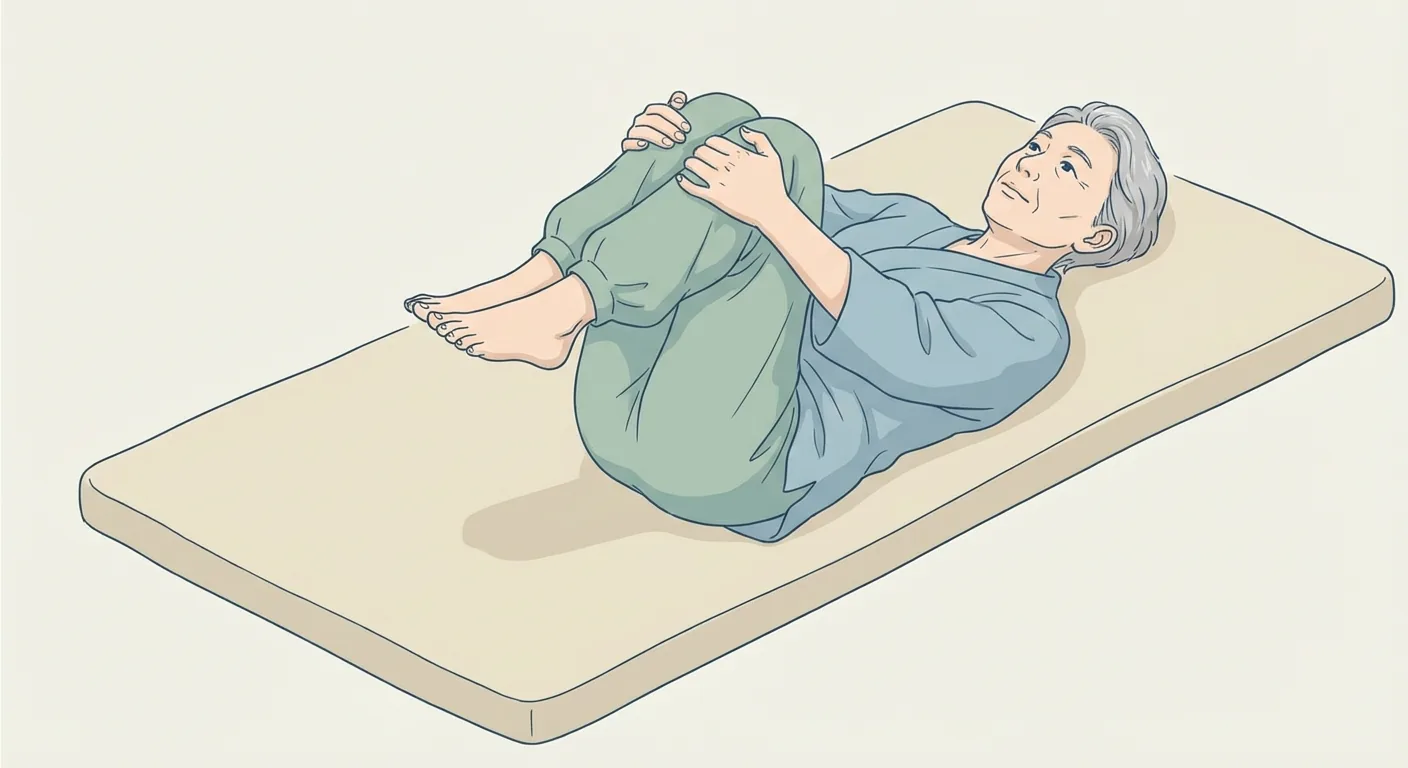
Double Knee-to-Chest — The Most Fundamental Stretch
- Lie on your back
- Slowly bring both knees toward your chest
- Wrap your hands around your knees and hold for 15-30 seconds
- Slowly release and repeat 2-3 times
This is the simplest stretch and the one most likely to give you an immediate feeling of relief in your lower back. Try this one first.
Other recommended stretches:
- Single knee-to-chest — Bring one knee at a time toward your chest
- Lumbar rotation stretch — Lie on your back with knees bent, then gently let both knees drop to one side, then the other
- Quadriceps stretch — Lie on your side, grasp your ankle, and gently stretch the front of your thigh
- Hip flexor stretch — Let one leg hang off the edge of the bed while hugging the other knee to your chest (this reduces the tendency for your back to arch while walking)
Strength Training (10 Repetitions x 2 Sets Each)
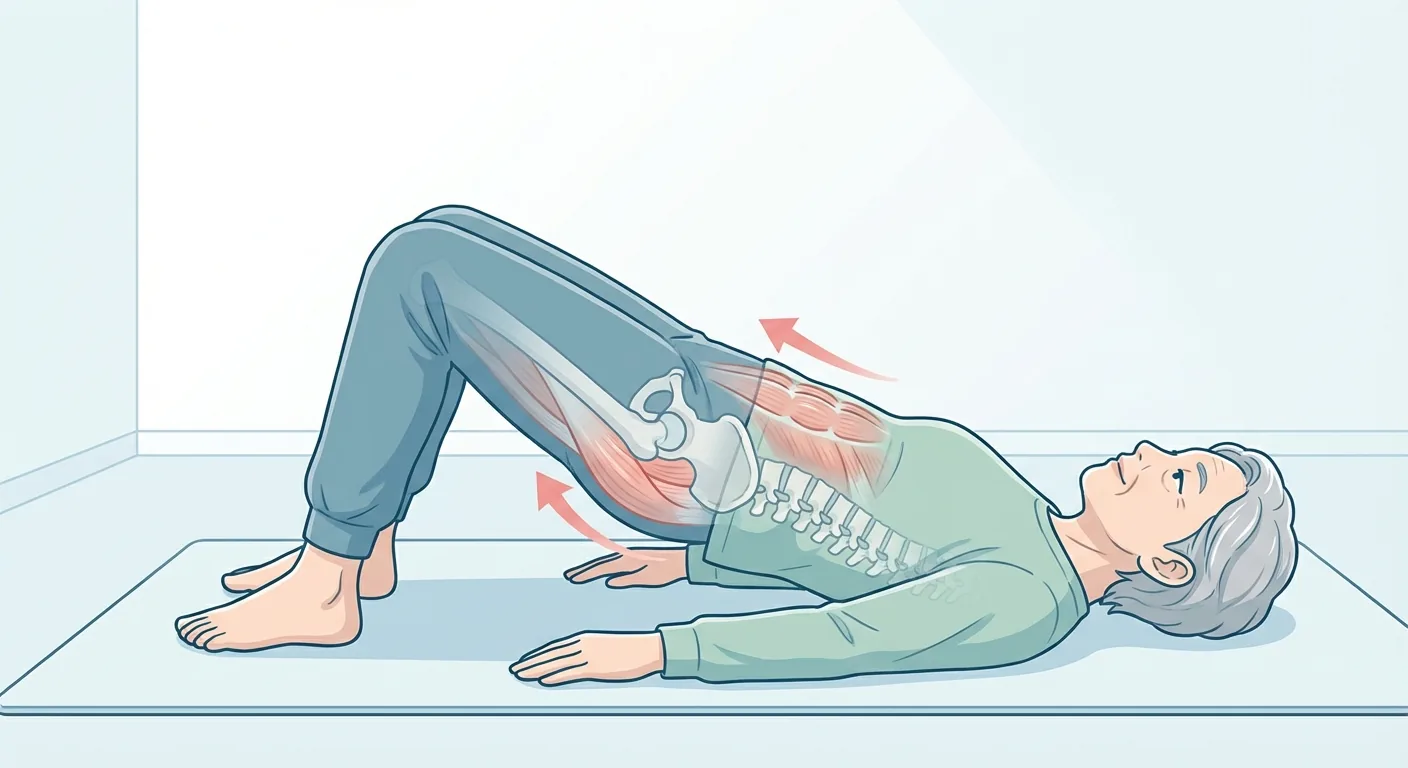
Bridge — Strengthening the Glutes and Core
- Lie on your back with both knees bent
- Slowly lift your hips off the ground
- Hold for 5 seconds, then slowly lower
- 10 repetitions x 2 sets
Other recommended strength exercises:
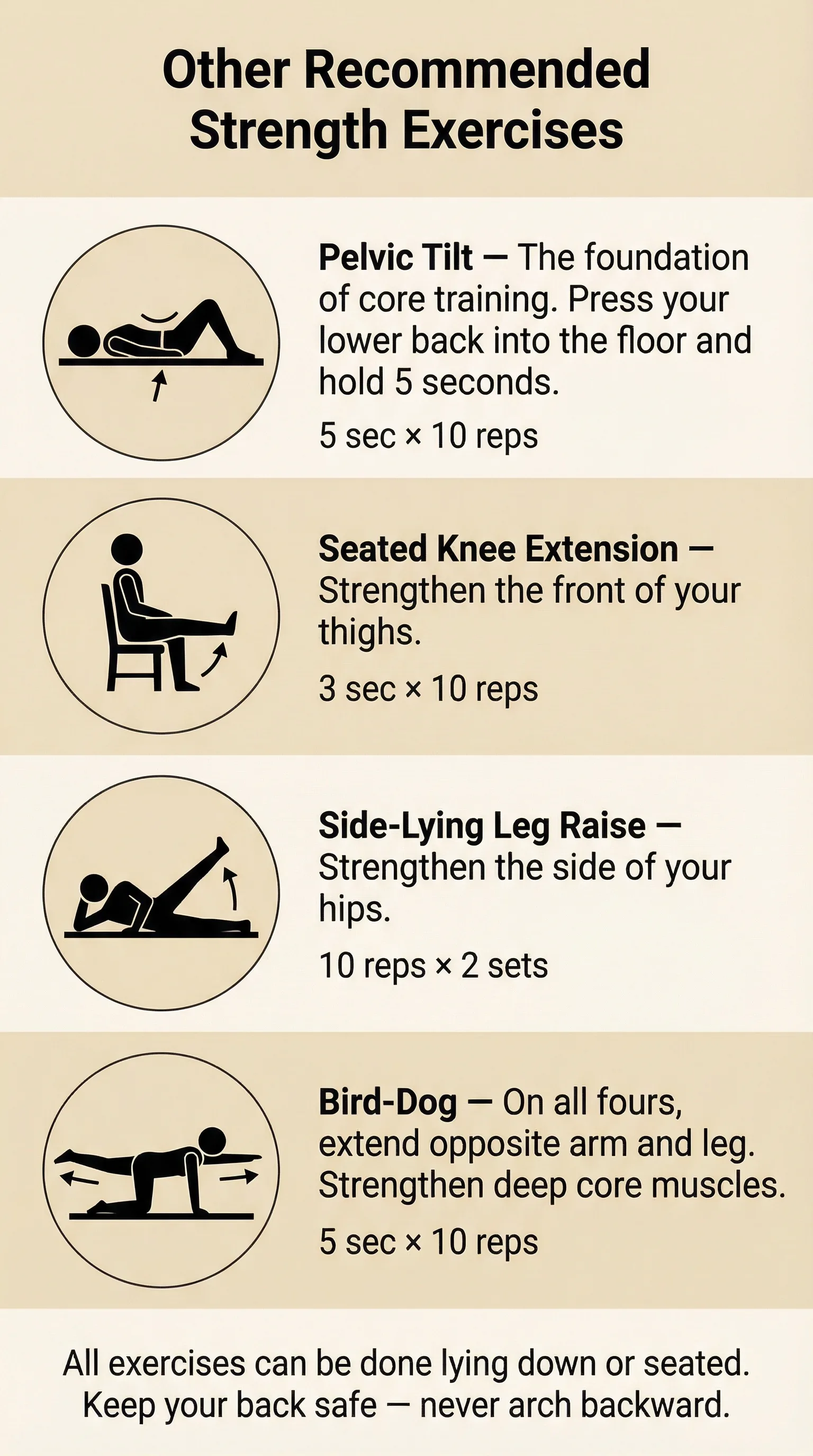
- Pelvic tilt (the foundation of core training) — Lie on your back with knees bent and press your belly button toward the floor, flattening your lower back. Hold for 5 seconds
- Seated knee extension — Sit in a chair and straighten one leg at a time, holding for 3 seconds. Strengthens the quadriceps (front of thigh)
- Side-lying leg raise — Lie on your side and slowly raise and lower the top leg. Strengthens the hip abductors
- Bird-dog (hands-and-knees opposite arm/leg reach) — From a hands-and-knees position, extend the opposite arm and leg simultaneously and hold for 5 seconds. Strengthens the deep core muscles (multifidus)
About core stability training:
Clinical trials have shown that core stability training is more effective than conventional exercise programs. Significant improvements were seen in JOA scores (a standard evaluation used by the Japanese Orthopaedic Association) and walking ability. The pelvic tilt, bridge, and bird-dog exercises described above are the core exercises used in these studies.
Aerobic Exercise (15-20 Minutes)
In order of recommendation:
- Stationary bike — The best option. The natural forward-leaning posture is safe for your spine
- Walking — Take a break whenever symptoms appear. Using a walker or cane is perfectly fine
- Pool walking — A low-impact option that is gentle on the joints
If you have intermittent claudication:
Intermittent claudication — where your legs go numb while walking and you need to stop and rest — gets better with rest. That's its defining feature. You don't need to push through it. "Walk, rest, walk again" is exactly the right approach.