Understanding Lumbar Spinal Stenosis
Why Does the Canal Become Narrow?
There are several reasons the spinal canal narrows over time.
Main Causes
| Cause | Explanation |
|---|---|
| Age-related changes | The most common cause — a natural part of aging |
| Disc degeneration | The cushions between vertebrae wear down and may bulge into the canal |
| Bone spurs | Bony growths develop along the edges of the vertebrae |
| Thickened ligaments | The ligaments that support the spine grow thicker (especially the ligamentum flavum) |
| Degenerative spondylolisthesis | One vertebra slips forward over the one below it, narrowing the canal |
Aging Is the Most Common Cause
Spinal stenosis is most common in people over 50 years old.
Over many years, the everyday stresses on your spine cause small, gradual changes that add up over time.
Something important to remember: Spinal stenosis is not your fault. It's not caused by something you did wrong. Everyone's spine changes with age. It just so happens that in some people, those changes are enough to press on the nerves. Think of it like gray hair or reading glasses — it's simply part of the body's natural aging process.
Intermittent Claudication — The Hallmark Symptom
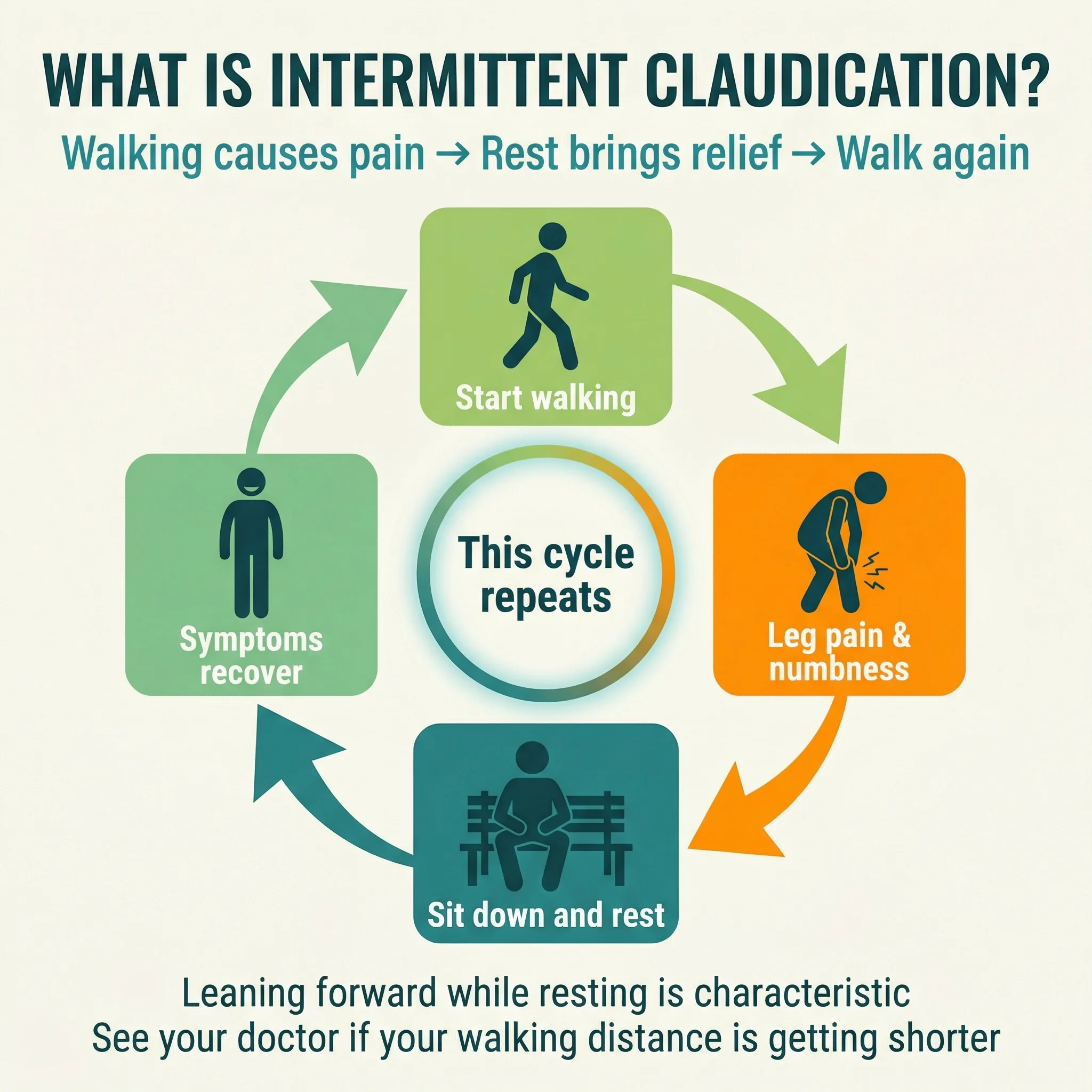
The most characteristic symptom of spinal stenosis is a pattern where pain, numbness, or weakness in the legs comes on during walking and goes away with rest. Doctors call this "neurogenic intermittent claudication." Typically, leaning forward or sitting down brings relief — which is why many people with this condition find they can ride a bicycle without trouble, even when walking is difficult. If you notice that the distance you can walk comfortably is getting shorter, it's time to talk to your doctor.