Understanding Lumbar Spinal Stenosis
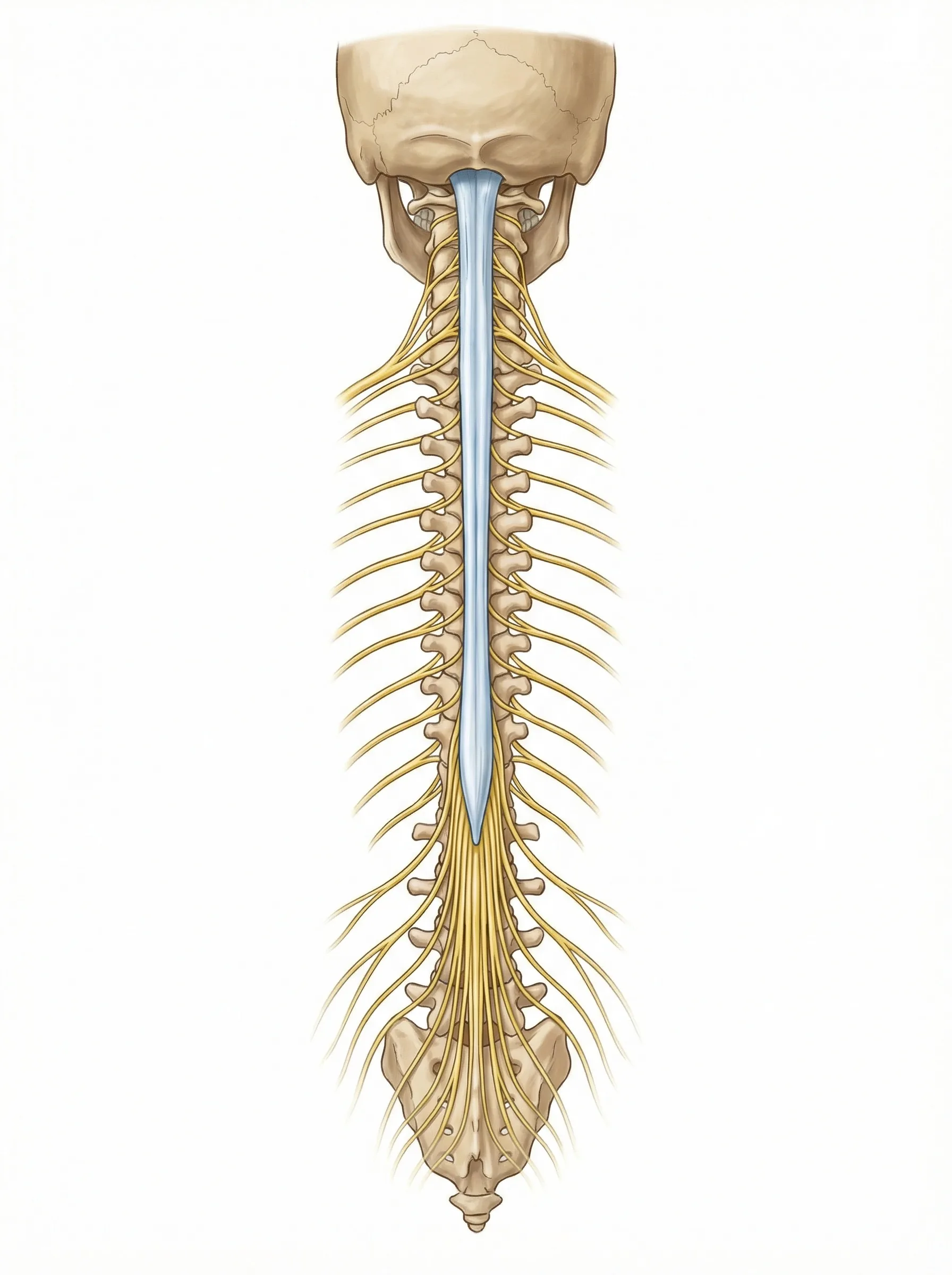
Types of Stenosis (by Symptoms) — Cauda Equina vs. Nerve Root
The classification above is based on where the narrowing is. There's another way doctors classify stenosis: by which nerves are affected and what symptoms result.
| Type | What's compressed | Main symptoms |
|---|---|---|
| Cauda equina type | The bundle of nerves in the center of the canal (cauda equina) | Numbness in both legs, difficulty walking, bladder or bowel problems |
| Nerve root type | A single nerve branch (nerve root) | Pain from buttock down one leg |
| Mixed type | Both cauda equina and nerve root | Symptoms of both types |
How the Two Classification Systems Relate
| Structural type | Tends to cause... |
|---|---|
| Central stenosis | Cauda equina type symptoms (the central nerve bundle is compressed) |
| Lateral stenosis | Nerve root type symptoms (a nerve is pinched at its exit point) |
| Combined (structural) | Mixed type symptoms |
Why does this matter to you? This distinction between "cauda equina type" and "nerve root type" directly affects which medications work best. For example, cauda equina type stenosis may respond well to medications that improve blood flow to the nerves (such as limaprost), while nerve root type stenosis is often treated with anti-inflammatory pain medications (NSAIDs). Ask your doctor: "Is my stenosis the cauda equina type or the nerve root type?"