Understanding Your Pain
Two Types of Pain -- Nociceptive Pain and Neuropathic Pain
There are two main types of pain. Because each type responds to different medications, understanding this distinction is important.
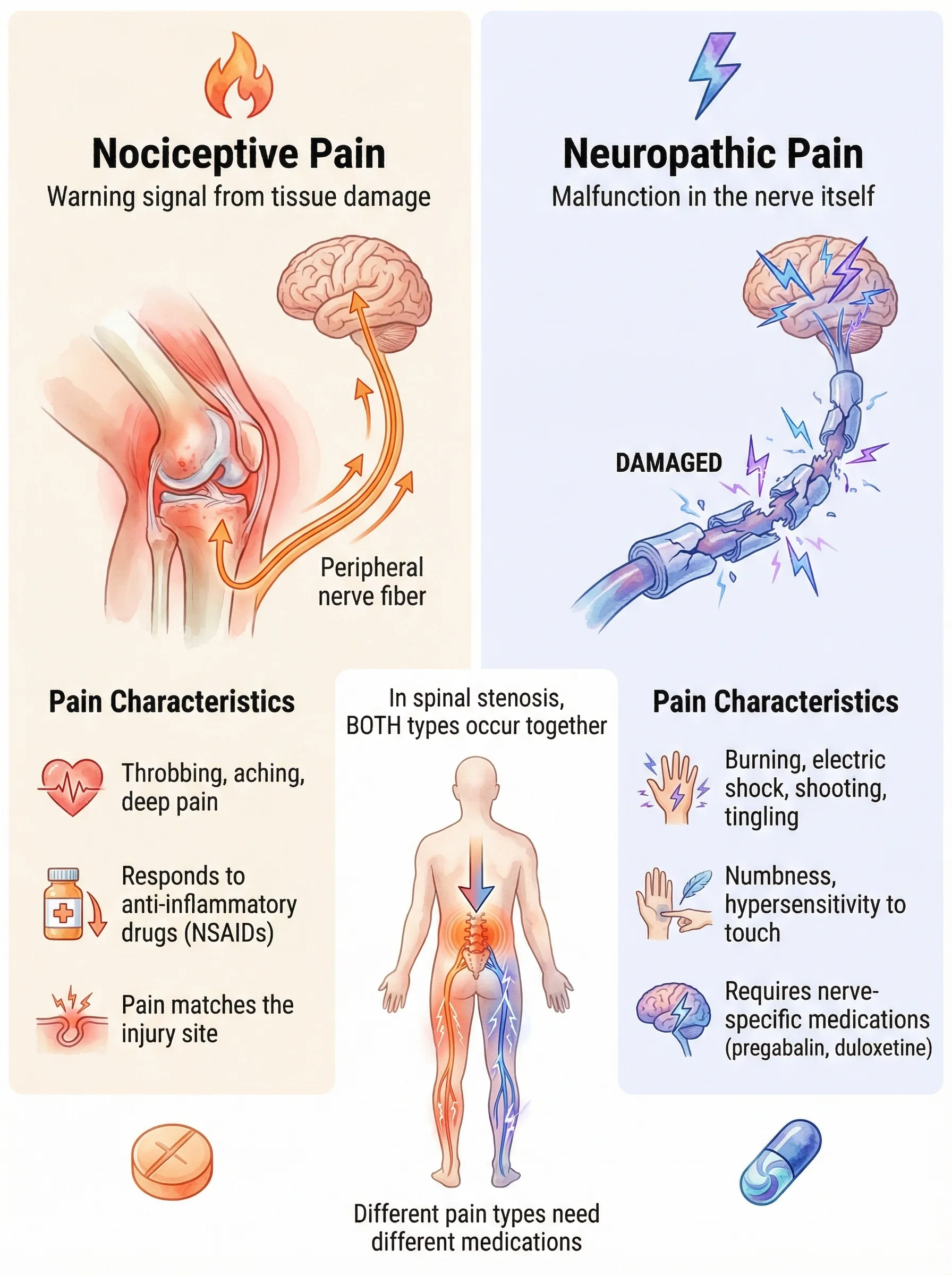
Nociceptive Pain
This is the pain you feel when tissue in your body is injured or inflamed. Nociceptive pain functions as a warning signal -- like the pain you feel when you touch something sharp or hot, triggering a reflex to pull your hand away.
| Feature | Details |
|---|---|
| What does it feel like? | Throbbing, aching, a deep or heavy pain |
| Causes | Fractures, joint inflammation, muscle strain, etc. |
| Effective medications | Anti-inflammatory painkillers (NSAIDs) such as ibuprofen or naproxen |
| Key characteristic | A "warning" pain that protects your body |
Neuropathic Pain
This is pain caused by damage or malfunction in the nerve itself.
| Feature | Details |
|---|---|
| What does it feel like? | Burning, electric shock-like, shooting, stinging |
| Accompanying symptoms | Numbness, reduced sensation, pain from light touch |
| Effective medications | Gabapentinoids (e.g., pregabalin, mirogabalin), duloxetine (ordinary painkillers are often ineffective) |
| Key characteristic | Pain from a nerve "malfunction" |
Which Type of Pain Occurs in Spinal Stenosis?
In lumbar spinal stenosis, both types of pain often occur together.
This is why you may need several different medications: Anti-inflammatory drugs for your back pain, and nerve-specific medications for leg numbness and pain -- different types of pain require different medications. You may feel like you are taking a lot of pills, but each one targets a different type of pain.