Treatment Options: The Big Picture
How Treatment Typically Progresses
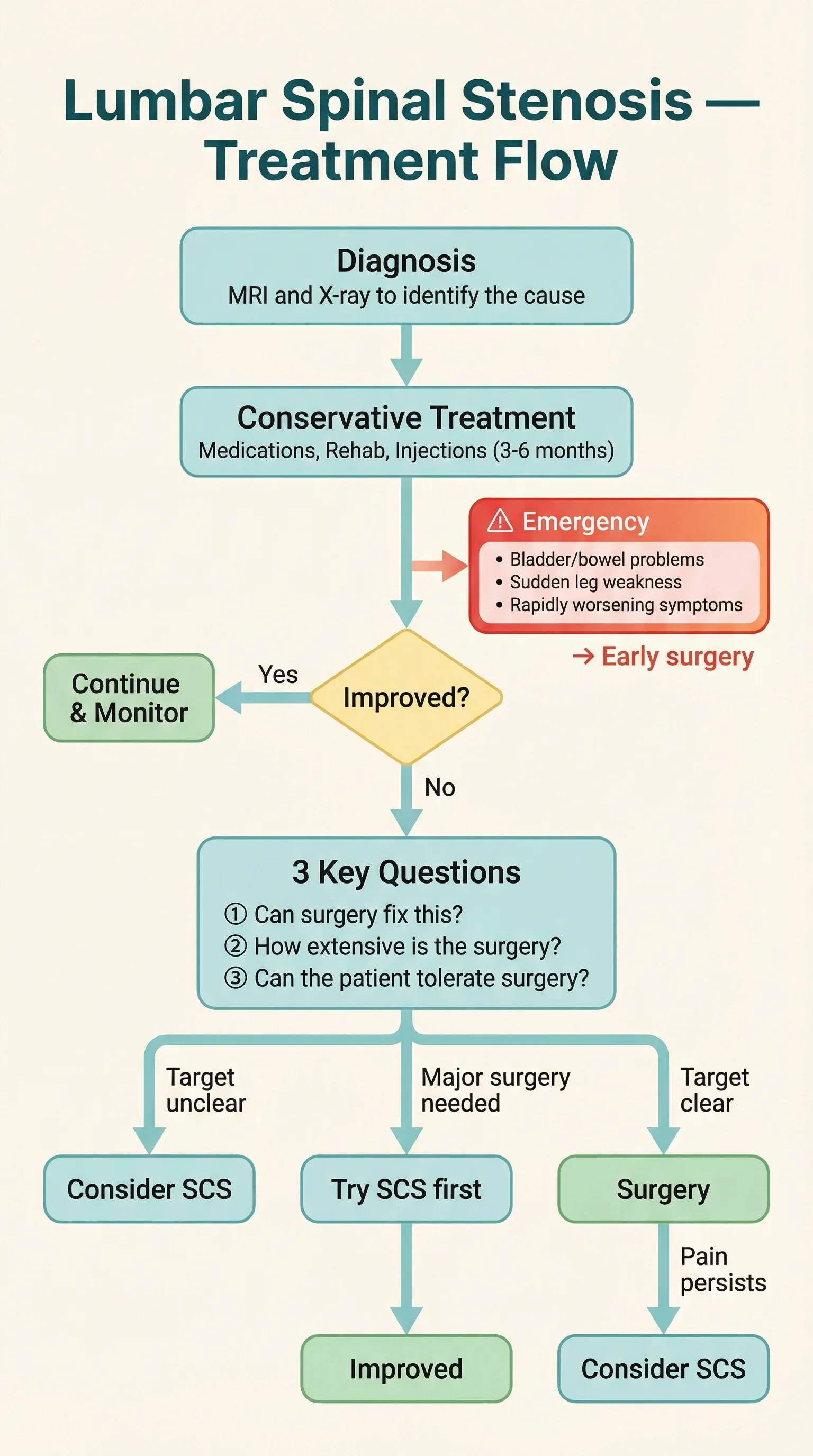
The Typical Path
For most patients, treatment follows this general sequence:
- Diagnosis — MRI, X-rays, and other imaging to identify the cause
- Start conservative treatment (3-6 months) — Medications, physical therapy, injections, and other non-surgical approaches
- Evaluate the results
- If symptoms improve — Continue treatment and monitor
- If symptoms don't improve — Move to the next step
- Answer three key questions to guide the decision
- Can the source of pain be addressed surgically?
- How extensive would the surgery need to be?
- Can the patient safely tolerate that surgery?
- Choose the right treatment
- No clear surgical target — Consider SCS
- Surgery possible but extensive fusion needed — Consider trying SCS first
- Clear surgical target with manageable risk — Proceed with surgery
- If pain persists after surgery — Consider SCS
When Urgent Action Is Needed
The following symptoms may require earlier surgical intervention:
- Loss of bladder or bowel control
- Sudden weakness in the legs
- Rapidly worsening symptoms
These are signs of serious nerve damage. Delaying treatment in these cases may make recovery more difficult.