"Is It Safe to Keep Taking This?" — Living with Pain Medication
"Is it bad for me to take this for so long?" "Will I get hooked?" I'll answer both honestly.
I practice in Japan, and the Japanese health care system is the one I know closely: which medicines are approved, and how they are prescribed and covered. Medicine names, approvals, available forms and prescribing practices differ from country to country, so this column describes the main types of pain medicine in general terms.
This column is general information. For the type and dose of your own medicines, always ask your own doctor or pharmacist.
When I prescribe medication, many patients ask me the same things.
"Doctor, is it really safe to keep taking this?"
"Won't it stop working over time? Won't I get hooked on it?"
This week I'll talk about how to live with the medications used for spinal stenosis.
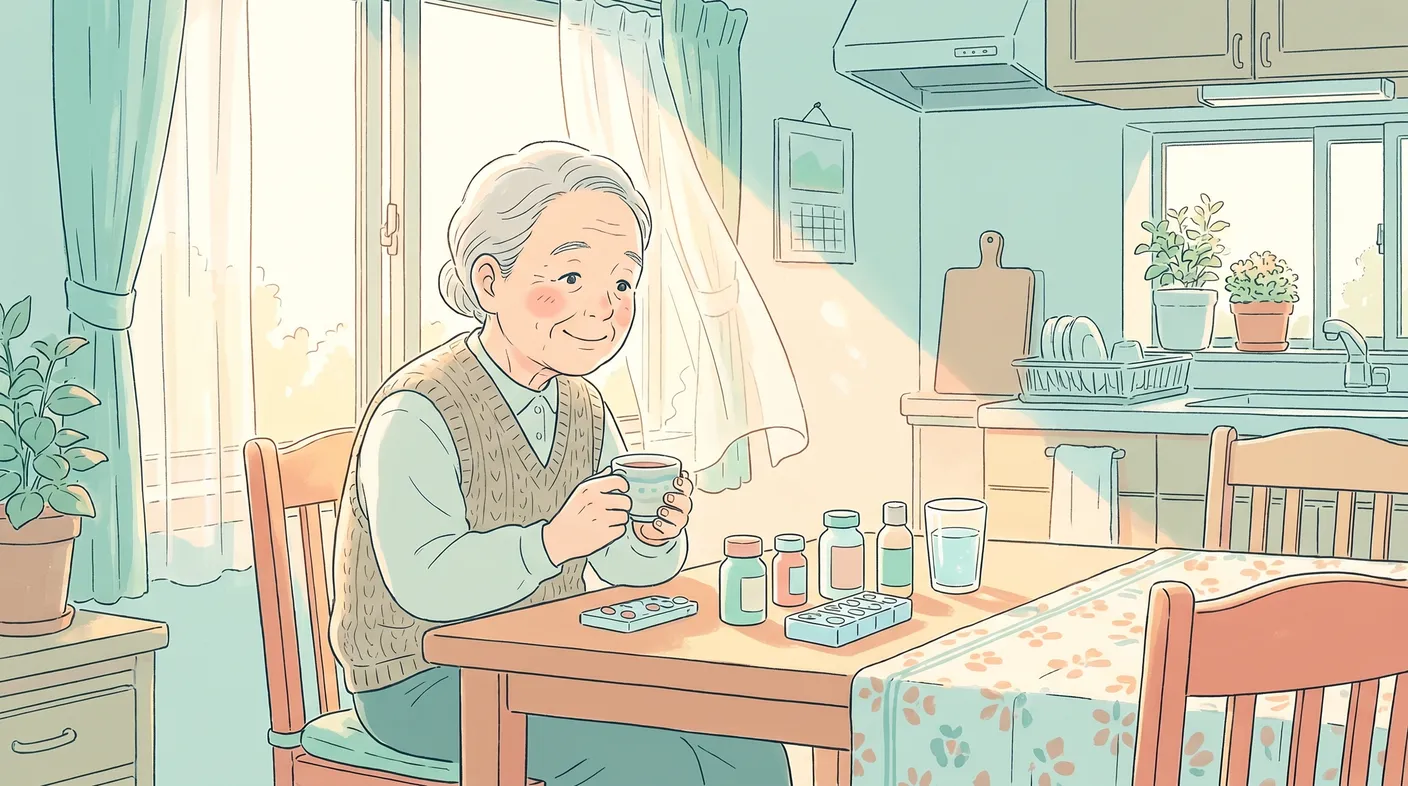 Medicine is a cane to lean on through the hard stretch. Lean on it wisely.
Medication Is Matched to Your Type of Pain
Spinal stenosis causes more than one type of pain, and which medicine works depends on the type.
| Type of Pain | Kind of Medicine |
|---|---|
| Inflammatory pain | Medicines that reduce inflammation (what most people call "pain relievers") |
| Nerve pain (numbness, pins and needles) | Medicines that calm overactive nerves |
| Numbness that comes on when you walk | Medicines that improve blood flow to help the nerves |
If you've been given several, each one has a different job. If you're not sure, ask your doctor which type each one is.
Will I Get Hooked?
The pain relievers and nerve pain medicines commonly used for spinal stenosis are not narcotics. As a rule, you don't need to worry that your body will get used to them and you'll need more and more.
There is one caution. Medicines that calm overactive nerves can cause dizziness and other symptoms if you stop them suddenly. So when it's time to stop, you reduce them gradually, working it out with your doctor. That isn't because you're hooked. It's the safe way to come off them.
Stronger medicines are sometimes used. When they are, your doctor manages the dose and how long you take them.
If It Doesn't Seem to Be Working
Some medicines take anywhere from a few days to a few weeks to work. If you feel nothing soon after starting and stop on your own, you may be giving up on a medicine too early.
It's not unusual for a small change in the dose or in when you take it to make a big difference. If you think a medicine may not suit you, talk to your doctor before you stop.
You Won't Necessarily Take It Forever
Some people worry that once they start, they'll be on it for the rest of their lives. Not necessarily.
Once the pain eases and settles down, many people can cut back little by little and eventually stop. If you notice you've missed a dose lately and felt fine, that may be a sign you're getting better.
Summary
- Medicines are chosen to match your type of pain
- Common pain relievers and nerve pain medicines are not narcotics. As a rule, you don't need to worry that your body will get used to them and you'll need more and more
- Don't stop nerve pain medicines suddenly. Reduce them gradually with your doctor
- Even if a medicine doesn't seem to be working, talk to your doctor before you stop
- Once the pain settles, you may be able to cut back
Think of medicine as a cane that helps you through the hard times.