Evidence-based exercises, how often to do them, and why professional guidance matters for spinal stenosis.
Exercise is a form of treatment, and the right exercises can work as well as medication.
What You'll Learn
Why exercise therapy works for spinal stenosis
The five key components of an effective exercise program
Specific exercises you can do safely at home
What to avoid
How exercise compares to surgery
How to continue rehabilitation long-term (insurance and community options)
1. Why Exercise Therapy Works
The Bottom Line
Exercise therapy is effective for reducing pain and improving physical function and quality of life in lumbar spinal stenosis.
The 2021 Clinical Practice Guidelines from the Japanese Orthopaedic Association suggest exercise therapy (a grade 2 "suggestion," the weaker of the guideline's two recommendation levels). They also state:
"Supervised exercise therapy is more effective than self-training" and "it can be recommended except in severe cases."
One study found that for mild to moderate stenosis, exercise therapy achieved results comparable to surgery after two years. Overall, however, the guideline judges exercise therapy to be less effective than decompression surgery, and the best type of exercise is not yet known.
Exercise therapy carries low risk and low cost. In the guideline evaluation, it received positive ratings across all dimensions: the balance of benefits and harms, patient values, and cost-effectiveness (consensus rate 92%).
Older patients tend to prefer exercise therapy:
According to guideline surveys, older patients are more likely to see the benefits of exercise therapy and to prefer conservative treatment, mainly because of the low risk and low cost.
Why Exercise Therapy Works
In lumbar spinal stenosis, the tunnel inside the spine (the spinal canal) has become narrower.
Posture and the width of the spinal canal are closely related:
Bending forward (flexion) → The spinal canal opens up → Pressure on the nerves decreases
Leaning backward (extension) → The spinal canal narrows further → Symptoms get worse
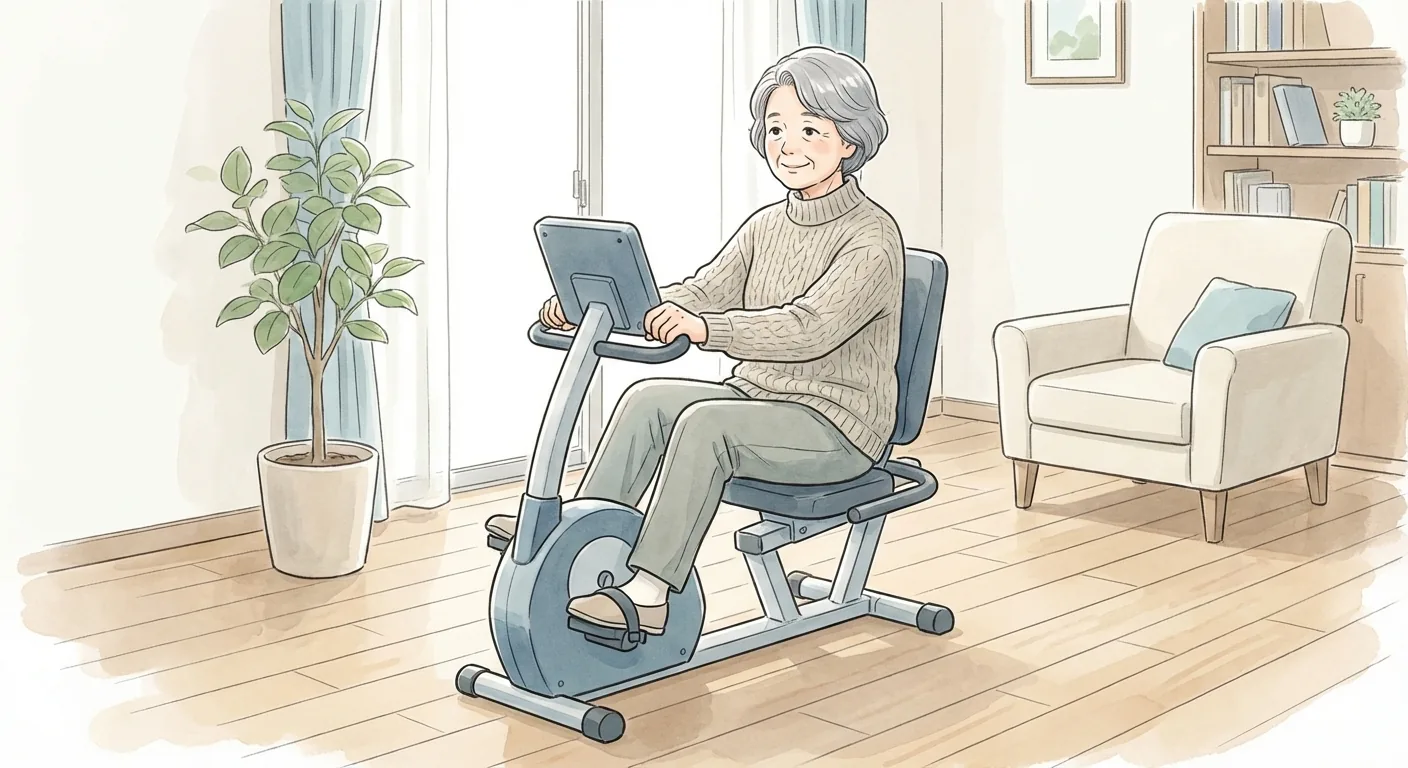
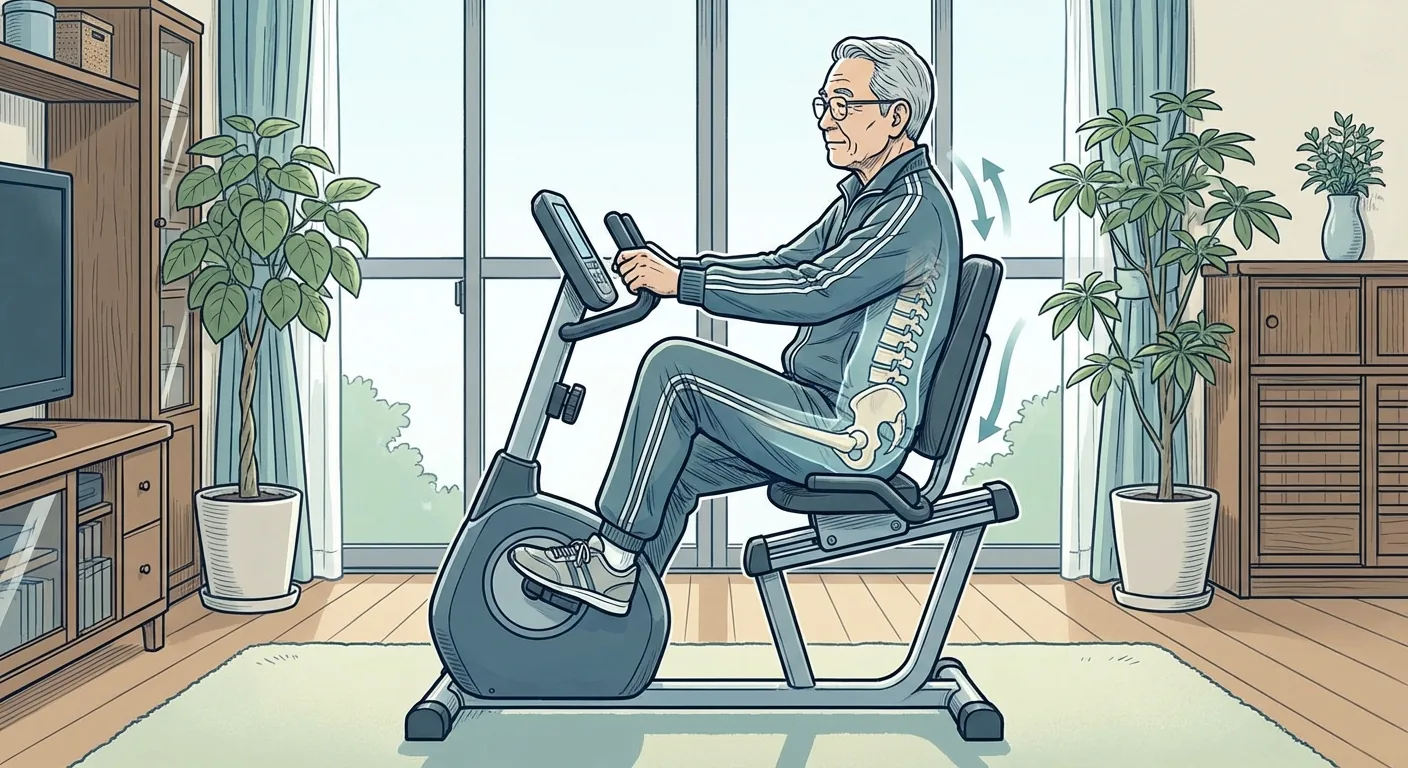
This is why stationary cycling (exercise bike) is especially effective. The cycling position naturally rounds your lower back, allowing you to build fitness without aggravating your symptoms.
Many people with spinal stenosis notice that "walking makes my legs numb, but I can ride a bicycle just fine." The difference is posture. If you can ride a bike, you are already getting good exercise.
The Five Pillars of an Effective Program
A research analysis of 13 clinical trials (1,440 participants, average age 65) identified common elements in the exercise programs that worked.
1. Stretching
Found in 88% of successful programs, and the element with the greatest impact.
Stretching the muscles of the lower back, buttocks, and legs helps open up the spinal canal.
2. Strength Training (Including Core)
Found in 88% of successful programs.
Strengthening the core muscles (abdominals and back muscles) stabilizes the lumbar spine and reduces the load on it.
3. Stationary Cycling (Exercise Bike)
Found in 63% of successful programs.
Programs that included cycling had a success rate of 71%, the highest of any single component. It is the most logical form of aerobic exercise for spinal stenosis because it keeps you in the forward-leaning position.
4. Aerobic Exercise (General)
Found in 88% of successful programs.
It is directly linked to better walking ability.
5. Psychological Support
Programs that included psychological support had a 100% success rate.
Addressing the fear and anxiety around pain leads to lasting improvements in walking endurance.
The key takeaway:
No single exercise has been proven "the best," but programs that combine stretching, strength training, and stationary cycling have the highest success rate.
2. Your Exercise Menu
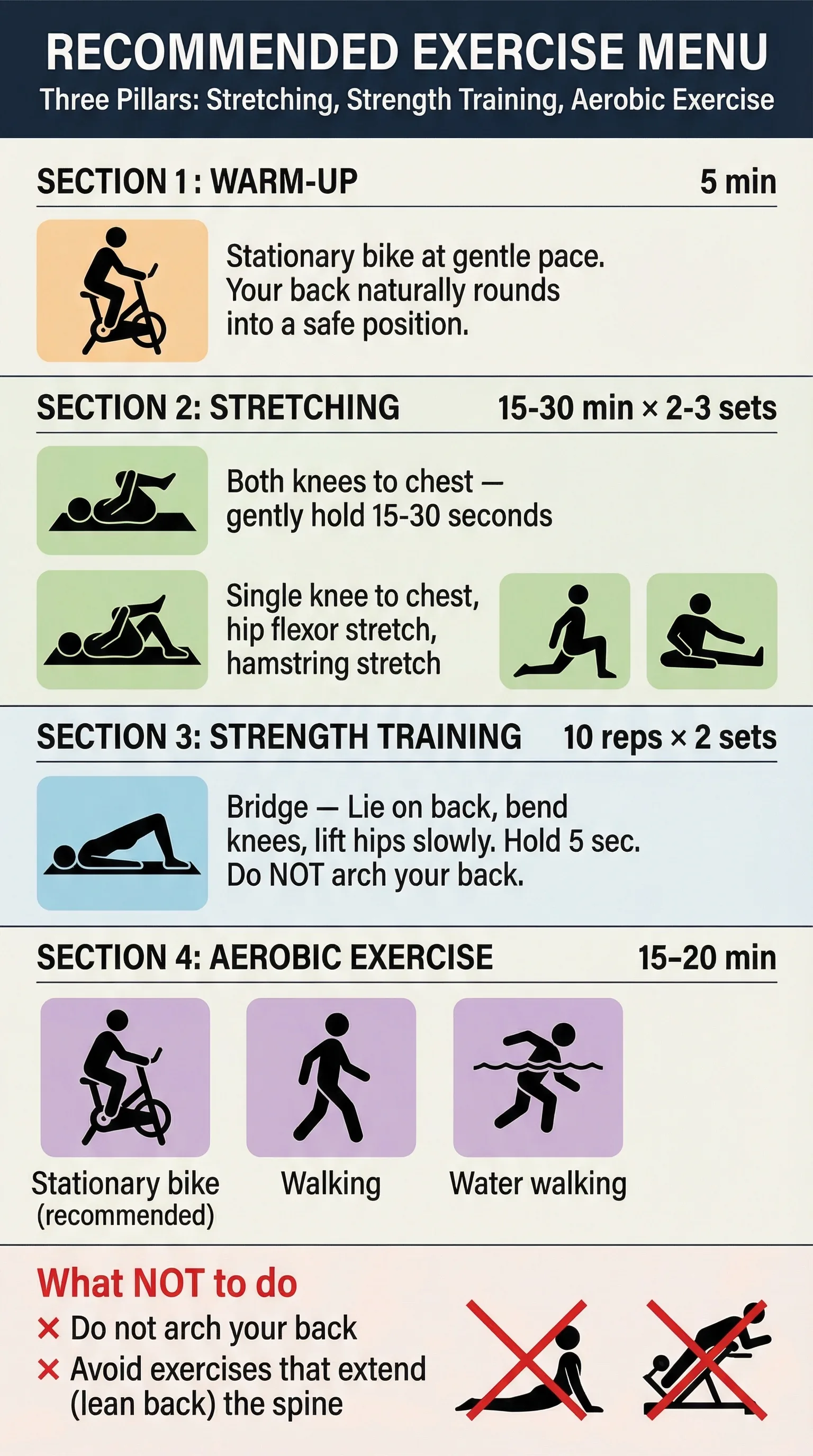
Recommended Exercise Menu
The following exercises are based on those shown to be effective in multiple clinical trials, adapted so you can do them safely at home.
Important:
Always check with your doctor before starting an exercise program. Some exercises may not be appropriate depending on your symptoms.
Warm-Up (5 Minutes)
Slow pedaling on a stationary bike is the best way to warm up.
The natural forward-leaning posture keeps your spine safe while warming up your body. If you don't have a stationary bike, marching in place while seated in a chair works too.
Stretching (Hold Each for 15-30 Seconds, Repeat 2-3 Times)
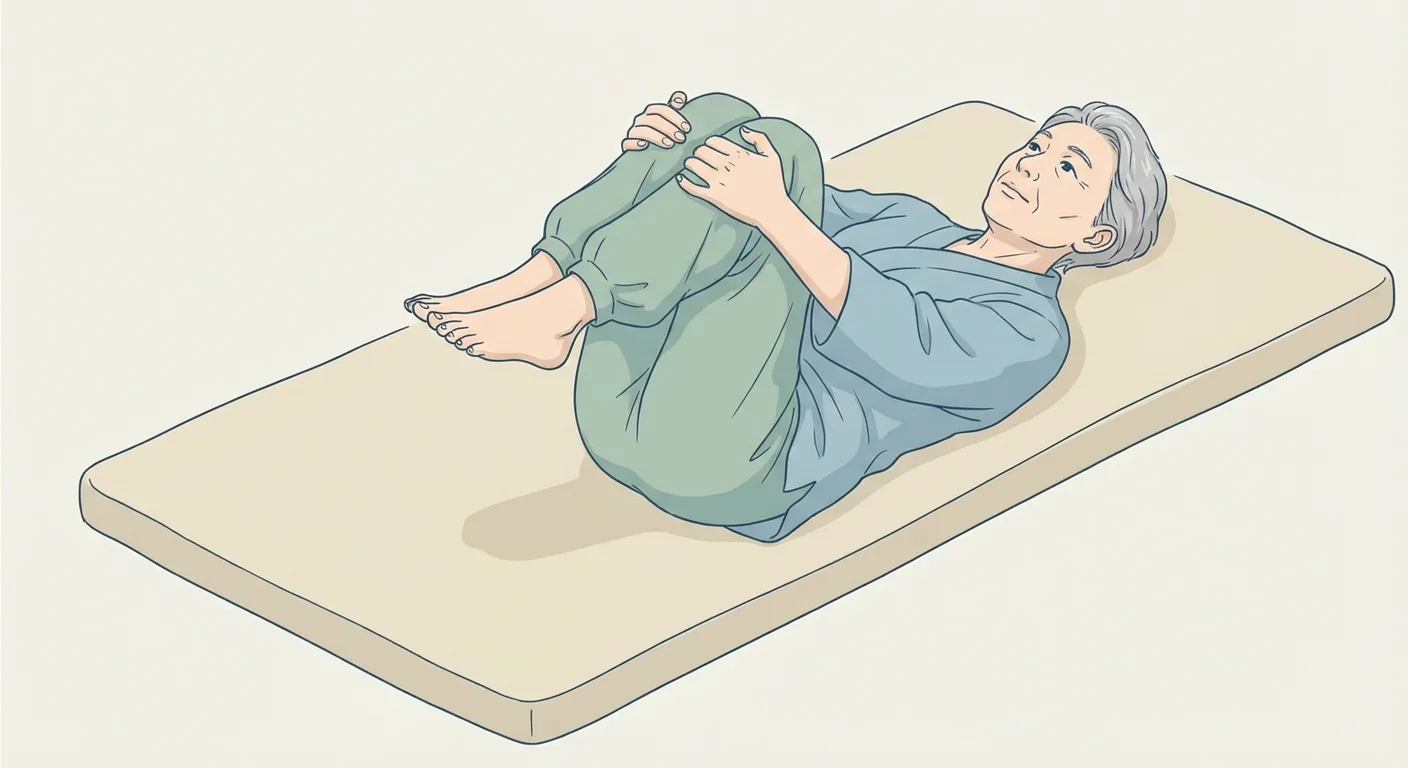
Double Knee-to-Chest: The Most Basic Stretch
Lie on your back
Slowly bring both knees toward your chest
Wrap your hands around your knees and hold for 15-30 seconds
Slowly release and repeat 2-3 times
This is the simplest stretch and the one most likely to give you an immediate feeling of relief in your lower back. Try this one first.
Other recommended stretches:
Single knee-to-chest: bring one knee at a time toward your chest
Lumbar rotation stretch: lie on your back with knees bent, then gently let both knees drop to one side, then the other
Quadriceps stretch: lie on your side, grasp your ankle, and gently stretch the front of your thigh
Hip flexor stretch: let one leg hang off the edge of the bed while hugging the other knee to your chest (this reduces the tendency for your back to arch while walking)
Strength Training (10 Repetitions x 2 Sets Each)
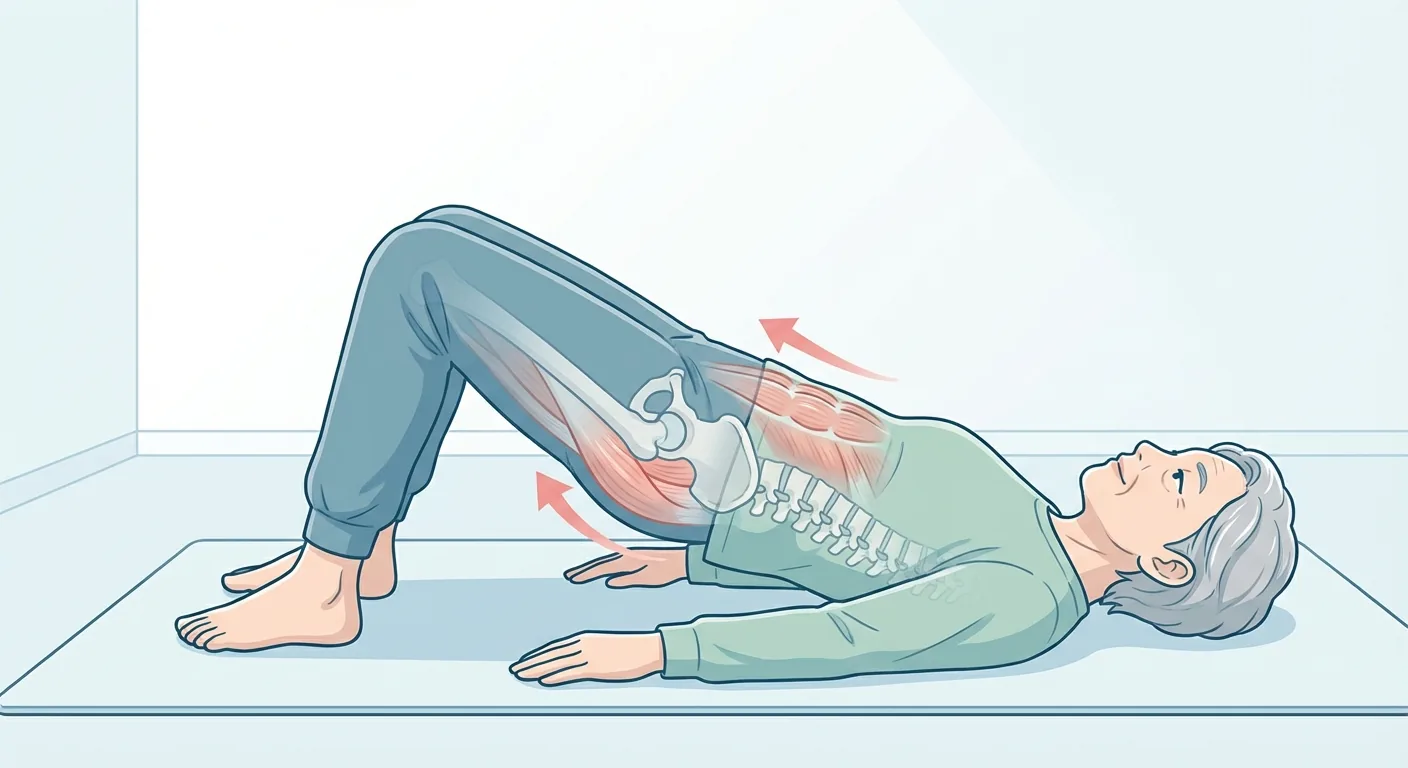
Bridge: Strengthening the Glutes and Core
Lie on your back with both knees bent
Slowly lift your hips off the ground
Hold for 5 seconds, then slowly lower
10 repetitions x 2 sets
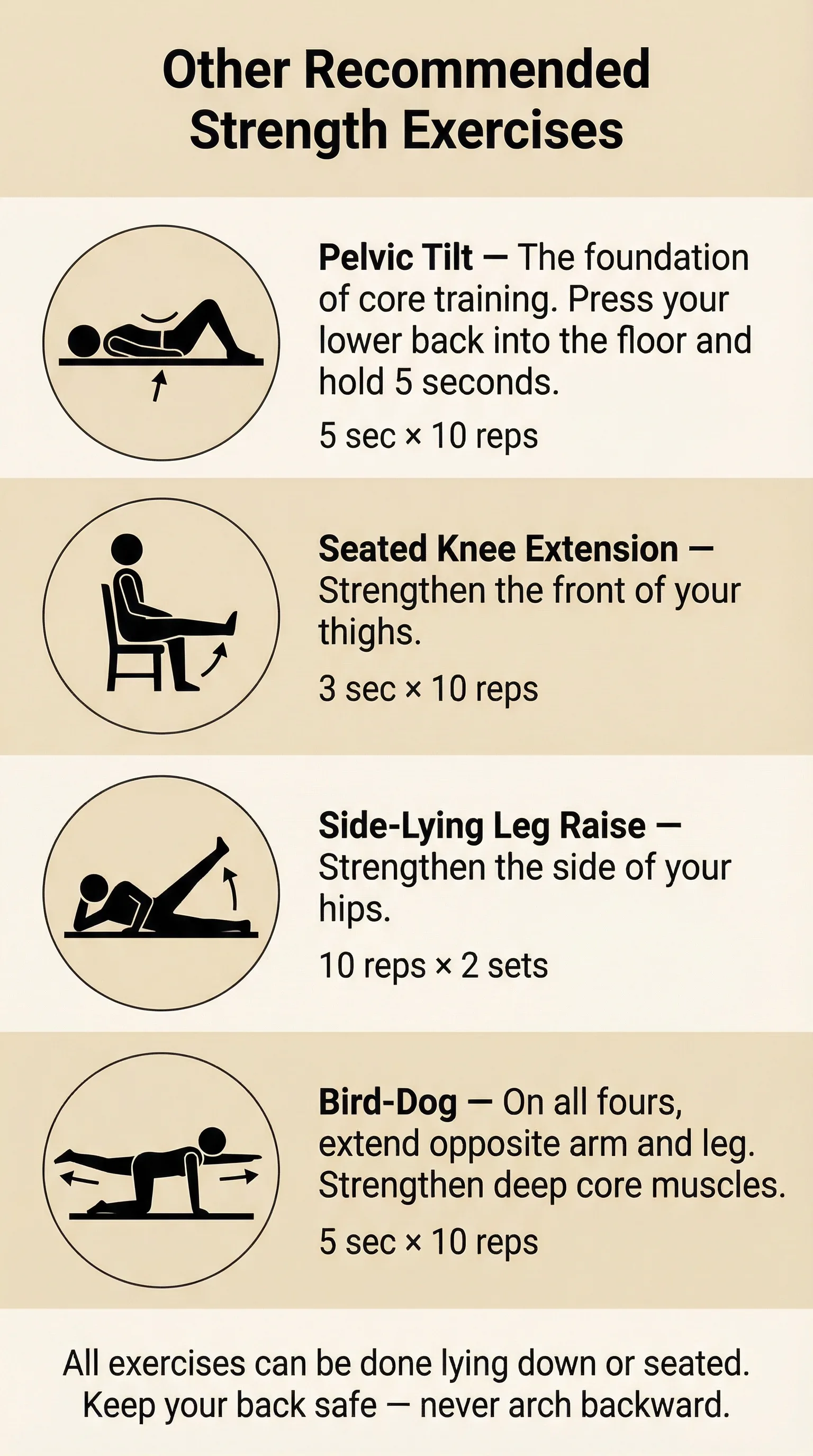
Other recommended strength exercises:
Pelvic tilt (the foundation of core training): lie on your back with knees bent and press your belly button toward the floor, flattening your lower back. Hold for 5 seconds
Seated knee extension: sit in a chair and straighten one leg at a time, holding for 3 seconds. Strengthens the quadriceps (front of thigh)
Side-lying leg raise: lie on your side and slowly raise and lower the top leg. Strengthens the hip abductors
Bird-dog (hands-and-knees opposite arm/leg reach): from a hands-and-knees position, extend the opposite arm and leg simultaneously and hold for 5 seconds. Strengthens the deep core muscles (multifidus)
About core stability training:
Clinical trials have shown that core stability training is more effective than conventional exercise programs. Significant improvements were seen in JOA scores (a standard evaluation used by the Japanese Orthopaedic Association) and walking ability. The pelvic tilt, bridge, and bird-dog exercises described above are the core exercises used in these studies.
Aerobic Exercise (15-20 Minutes)
In order of recommendation:
Stationary bike: the best option. The natural forward-leaning posture is safe for your spine
Walking: take a break whenever symptoms appear. Using a walker or cane is perfectly fine
Pool walking: a low-impact option that is gentle on the joints
If you have intermittent claudication:
Intermittent claudication (your legs go numb while walking and you need to stop and rest) gets better with rest. That is its defining feature. You don't need to push through it. "Walk, rest, walk again" is exactly the right approach.
What to Avoid
The following exercises can make your symptoms worse:
Exercises that arch your lower back: these narrow the spinal canal further
Pushing through pain to keep walking: it's fine to stop and rest
Heavy weightlifting, such as barbell squats
Jerky or bouncing movements: always move slowly and with control
Stop exercising and contact your doctor if:
Numbness or weakness in your legs suddenly gets worse
You develop problems with urination or bowel control
Pain persists even at rest
3. Frequency, Guidance, and Surgery
Exercise Frequency and Professional Guidance
Recommended Schedule
Frequency: 2-3 times per week (supervised) + daily self-guided stretching
Duration: 30-60 minutes per session
Minimum period: At least 6 weeks
Instructor: A physical therapist is ideal
Why Professional Guidance Matters
The guidelines find that exercise supervised by a physical therapist or other qualified specialist works better than exercising on your own.
Research consistently shows that supervised exercise produces better outcomes in pain, physical function, and walking ability compared to home exercise alone.
Comparison
Results
Supervised vs. self-guided exercise
Over 2 years, supervised exercise was significantly better for pain reduction and walking function
Physical therapist vs. home exercise
Supervised exercise was superior in pain, physical function, and quality of life
Individualized exercise vs. medication/injections
All groups improved walking ability, but individualized exercise showed the best results for pain and physical function
A physical therapist can customize your exercise program based on your stenosis type and symptom severity. Self-directed exercise may not be effective enough or could risk making your symptoms worse.
Even just a few sessions to start:
Learning the correct form from a professional makes your exercises much more effective and safer.
Practical Tips for Older Adults
Start with the double knee-to-chest stretch. It's the easiest and gives the quickest relief
If you have a stationary bike, make it your priority. Even an inexpensive home model is fine. It eliminates fall risk and lets you exercise while seated
A little every day is better than a lot once a week. Keeping at it matters most
"Rest when it hurts" is perfectly OK. Never push through pain
Exercise therapy works like a prescription: the right "dose" and the right "technique," practiced consistently, can improve your symptoms and may help you avoid surgery.
Exercise Therapy vs. Surgery
Factor
Exercise Therapy
Surgery (Decompression)
Short-term results
Somewhat slower improvement
Faster initial improvement
Results after 2 years
Comparable improvement
Stable improvement
Risk
Very low (mild muscle soreness at most)
Surgical risks apply
Cost
Low
High
Best for
All but the most severe cases
Severe cases or when conservative treatment fails
From the guideline commentary:
A 2015 study reported that exercise therapy and surgery showed comparable improvement at the two-year mark. Severe and mild cases responded differently, though, and surgery is better suited for severe stenosis.
Exercise therapy is low-risk and low-cost, which makes it a sensible first-line treatment for all but the most severe cases.
Combining Exercise with Other Treatments
Exercise therapy is effective on its own, but it can also be combined with other treatments:
Epidural steroid injection + exercise therapy: the injection improves physical function, and adding exercise further improves quality of life (emotional and mental well-being)
Exercise therapy + ultrasound therapy: exercise improves pain and function, and adding ultrasound can reduce the need for pain medications
If You're Preparing for Surgery
Even if surgery has been scheduled, pre-surgery exercise (prehabilitation) can be beneficial.
A Canadian clinical trial showed that a 6-week exercise program before surgery led to:
Significant improvement in leg pain
Improved core strength and endurance
Longer walking tolerance
Better recovery at 3-6 months after surgery
No adverse events were reported, so it can be done safely.
What you can do while waiting for surgery:
Doing appropriate exercises while you wait for surgery can improve your recovery afterward. Ask your surgeon: "Are there any exercises I should be doing before my surgery?"
4. Long-Term Rehabilitation and Summary
Continuing Rehabilitation Long-Term
Hospital-Based Rehabilitation Has Time Limits
It's natural to want to keep going to rehabilitation at a hospital or clinic, but outpatient rehabilitation covered by health insurance typically has a time limit.
For musculoskeletal conditions, the standard period is approximately 150 days from the onset of symptoms or from surgery. After this period, most patients must transition out of hospital-based rehabilitation.
Lumbar spinal stenosis is a condition you live with long-term. After the 150-day rehabilitation window closes, continuing the right exercises on your own isn't always easy. Many people gradually stop exercising. This is very common.
Community and Insurance-Based Options
In many countries, community-based rehabilitation programs, physical therapy clinics, and fitness programs for seniors can help you continue supervised exercise after your hospital-based sessions end.
Ask your doctor or care coordinator about:
Outpatient physical therapy clinics in your area
Community exercise programs for older adults
Senior fitness centers with staff trained in spine conditions
Home-visit physical therapy if traveling is difficult for you
The key difference from hospital rehabilitation:
Community and long-term rehabilitation programs often have no strict time limits. They can help you keep up your exercise routine after hospital-based therapy ends.
Choosing the Right Program
When looking for a rehabilitation or exercise program, look for one where a physical therapist or qualified exercise specialist is involved. With lumbar spinal stenosis, avoiding exercises that arch your back is critical, and an instructor who understands this will keep you safe.
Tell your care coordinator or therapist: "I need a program that's appropriate for spinal stenosis, one that avoids back extension exercises."
Summary
Key Point
Details
Why it works
Forward-bending posture opens the spinal canal and reduces nerve pressure
Best combination
Stretching + strength training + stationary cycling
Stationary cycling
The single most effective exercise; safe, forward-leaning posture
Start simple
The double knee-to-chest stretch gives the quickest relief
Professional guidance
Supervised exercise is significantly more effective than self-guided
Compared to surgery
Comparable results at 2 years for mild to moderate cases
Consistency
A little every day is better than a lot once a week
→ Treatment Overview: all your options, including exercise, in one place
Questions to Ask Your Doctor
"Which exercises are safe for my specific type of stenosis?"
Your doctor or physical therapist can tailor a program to your condition
"Can you refer me to a physical therapist who specializes in spine conditions?"
Even a few supervised sessions can make a big difference
"Are there any exercises I should avoid?"
Knowing what not to do is just as important as knowing what to do
"Should I be doing prehabilitation exercises before my surgery?"
If surgery is in your future, starting early can speed your recovery
"What long-term rehabilitation options are available to me after my hospital sessions end?"
Planning ahead helps you keep the progress you've made
This page provides medically accurate information, but it is not a substitute for professional medical advice. Please consult your doctor for diagnosis and treatment tailored to your individual situation.