When Your Parent Is Diagnosed with Spinal Stenosis
"Your Parent Has Spinal Stenosis" — What Now?
First, Take a Breath
When a doctor tells your parent — or tells you — "It's spinal stenosis," it's natural to feel worried. But here are some reassuring facts to keep in mind:
| Fact | What it means |
|---|---|
| It's extremely common | Millions of people have it. Roughly 10% of adults over 60 are affected |
| It's not life-threatening | Unlike cancer, spinal stenosis does not endanger your parent's life |
| There are many treatment options | Medications, rehabilitation, injections, surgery, SCS, and more |
| Most people improve | Conservative treatment alone helps 50–70% of patients |
That said, it shouldn't be ignored. With proper treatment, pain and walking difficulties can be managed or prevented from getting worse.
The Basics — A Simple Explanation for Families
Inside the spine, there is a "tunnel" (the spinal canal) through which nerves travel from the brain down to the legs. Over time, the bones and ligaments around this tunnel gradually thicken and change shape, making the tunnel narrower. When it becomes narrow enough to squeeze the nerves inside, this is spinal stenosis.
| Normal spinal canal | Stenotic spinal canal |
|---|---|
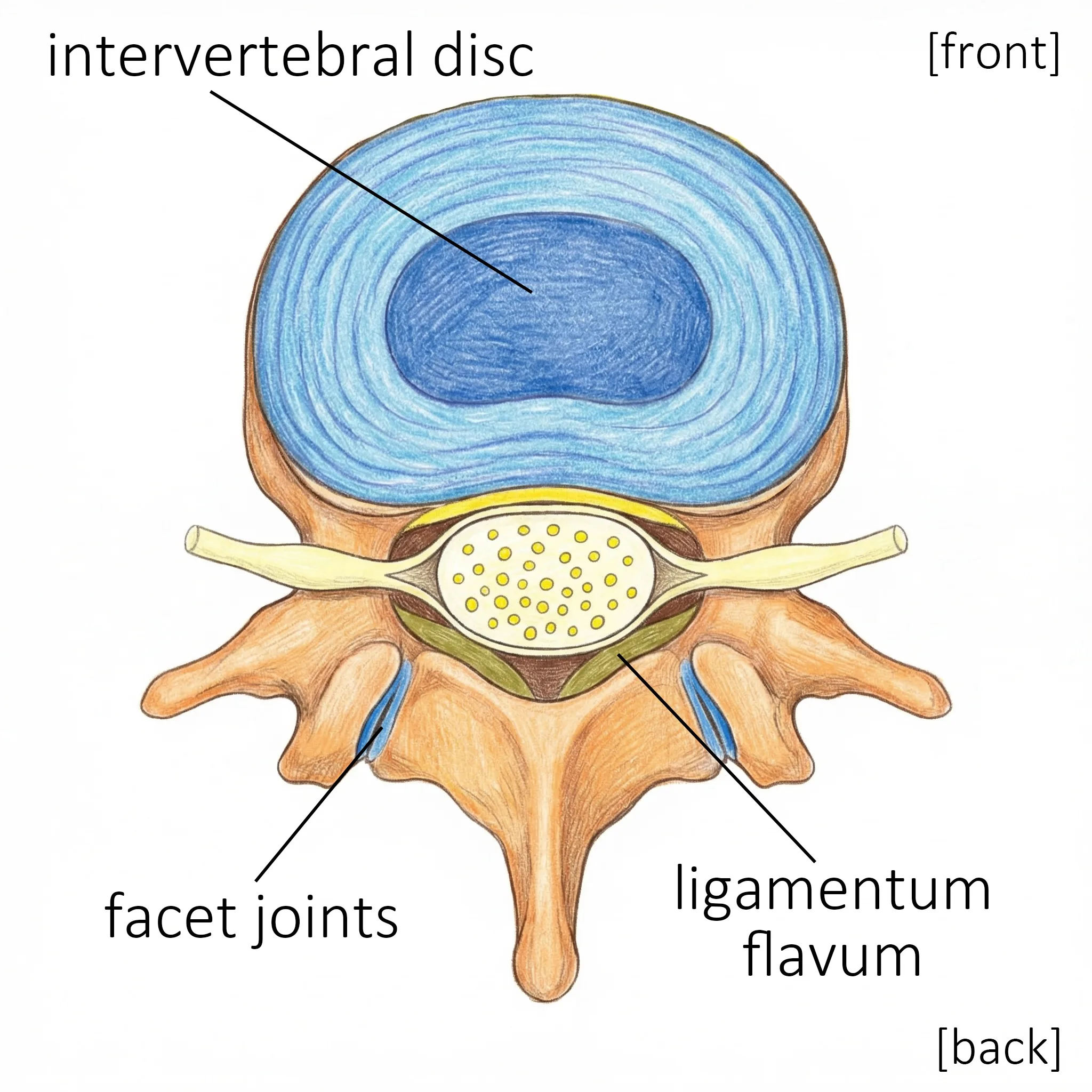 |
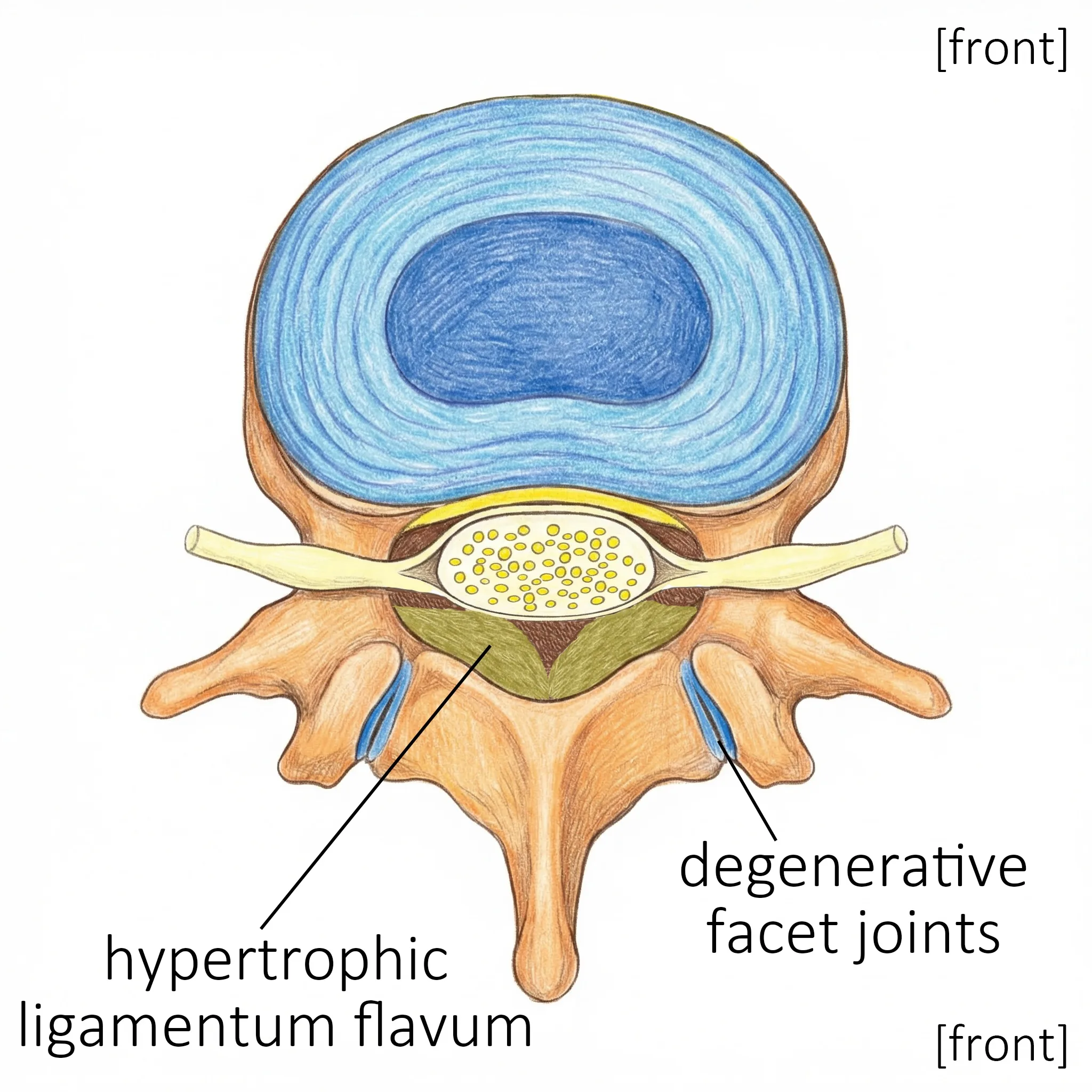 |
The hallmark symptoms are:
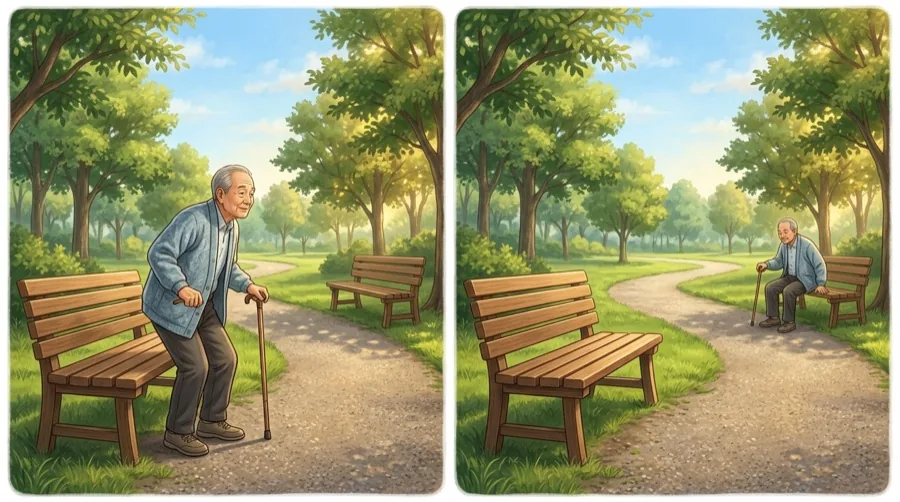
- Intermittent claudication — leg pain or numbness that comes on after walking a short distance and goes away with rest
- Numbness in the legs — a tingling sensation, similar to "pins and needles" after sitting cross-legged
- Lower back pain — though back pain alone does not necessarily mean stenosis
[!info] Want to learn more? For a detailed explanation of how the condition works, see What Is Lumbar Spinal Stenosis?.