Surgical Treatment
Types of Surgery and How to Choose
Surgery for lumbar spinal stenosis (LSS) falls into two main categories: decompression and fusion.
Decompression — Relieving Pressure on the Nerves
Decompression surgery removes bone and thickened ligaments that are pressing on your nerves, widening the space they travel through.
Think of it this way: Imagine a tunnel whose ceiling has partially collapsed. Decompression is like shaving away the ceiling to open the tunnel back up.
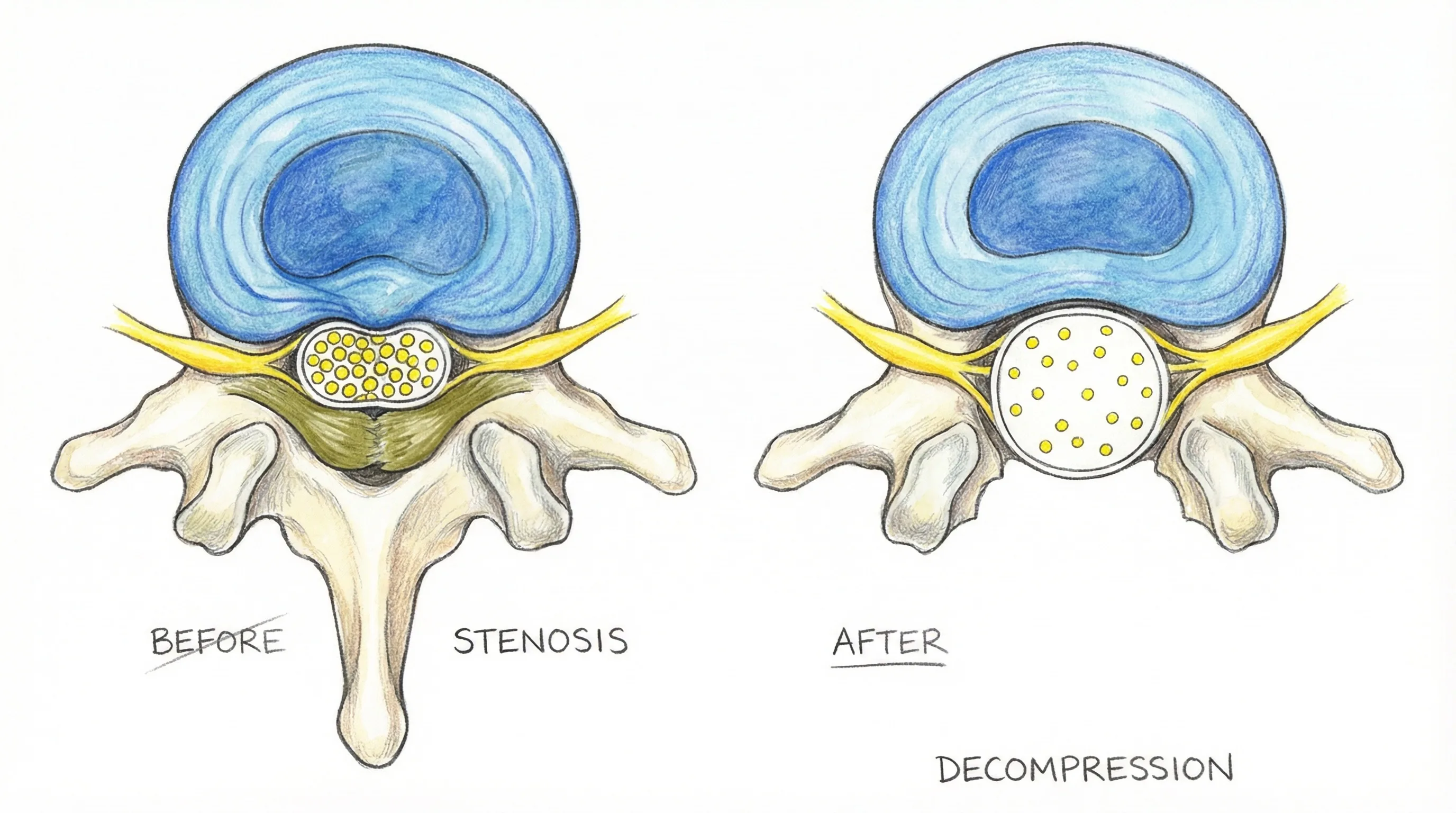
Guideline recommendation: For LSS without instability where conservative treatment has not been effective, decompression surgery is recommended (Recommendation grade 2, Evidence level B).
Main types: Laminectomy, laminoplasty, partial laminectomy, endoscopic surgery
Outcomes: Results are superior to conservative treatment at 2 years, though the difference narrows over time. Notably, many patients in conservative treatment groups eventually ended up having surgery, suggesting that early surgery may be beneficial for more severe cases.
Learn more about decompression surgery
Fusion — Stabilizing an Unstable Spine
Fusion surgery uses screws and spacers to lock unstable vertebrae in place. It is usually performed together with decompression.
Think of it this way: Imagine a wobbly bookshelf. Fusion is like bolting it to the wall with brackets so it no longer sways.
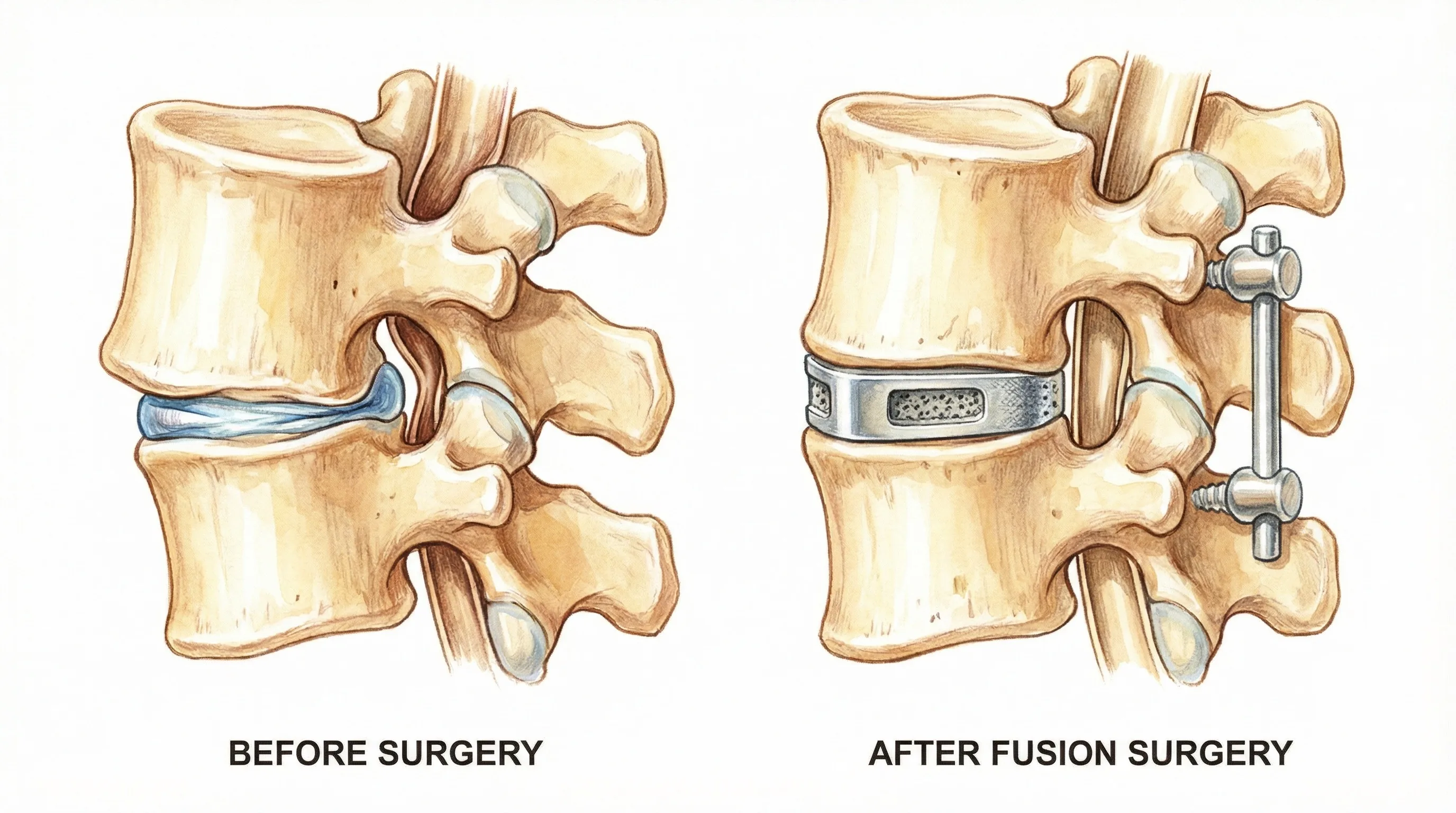
Guideline recommendation: Fusion is beneficial for cases with spinal instability. However, routinely adding fusion to decompression is not recommended (Recommendation grade 2, Evidence level B).
When fusion may be considered: Slippage of 5 mm or more, rotational instability of 10 degrees or more, back pain as the primary symptom, or when extensive decompression would compromise spinal stability.
Outcomes: Fusion produces significantly better results for back pain, but shows no difference for leg pain compared to decompression alone. Long-term outcomes are favorable in patients with confirmed instability.
Important note: Fusion is an irreversible decision. The segments above and below the fused area take on extra stress, which can lead to "adjacent segment disease" (ASD). A significant proportion of patients may eventually need additional surgery as a result.
Learn more about fusion surgery / Learn about long-term risks of fusion
Minimally Invasive Surgery (Endoscopic / MIS)
Minimally invasive techniques allow the same procedures to be performed through much smaller incisions. Both decompression and fusion can be done using minimally invasive approaches.
| Advantages | Disadvantages |
|---|---|
| Smaller incision, less pain | Not suitable for every case |
| Less blood loss | Requires advanced surgical skill and experience |
| Faster recovery, shorter hospital stay | Available at fewer facilities |
| Greater benefit for elderly patients | Limited surgical field of view |